
General legal information only. Check the controlling document and current law before acting.
Estate planning becomes manageable when you separate four things: who can act during life, who receives property at death, which record controls each asset, and which state or agency supplies the rule.
Choose the task in front of you
Plan ahead
Build or update a will
Execution, executor and guardian choices, specific gifts, and coordination with beneficiary forms.
Manage property
Understand and fund a trust
Trust terms, asset ownership, trustee authority, beneficiary rights, administration, and exit choices.
After a death
Organize probate work
Venue, appointment, inventory, notices, claims, tax records, accounting, and distribution.
Care or incapacity
Coordinate authority and care
Powers of attorney, health decisions, housing, benefits, fiduciary duties, and safeguards.
One family, several control systems
Match each decision to the record that governs it
A will, trust, deed, account beneficiary form, power of attorney, and court order do different jobs. The first useful question is not “Which document is best?” It is “Which record controls this person, asset, and moment?”
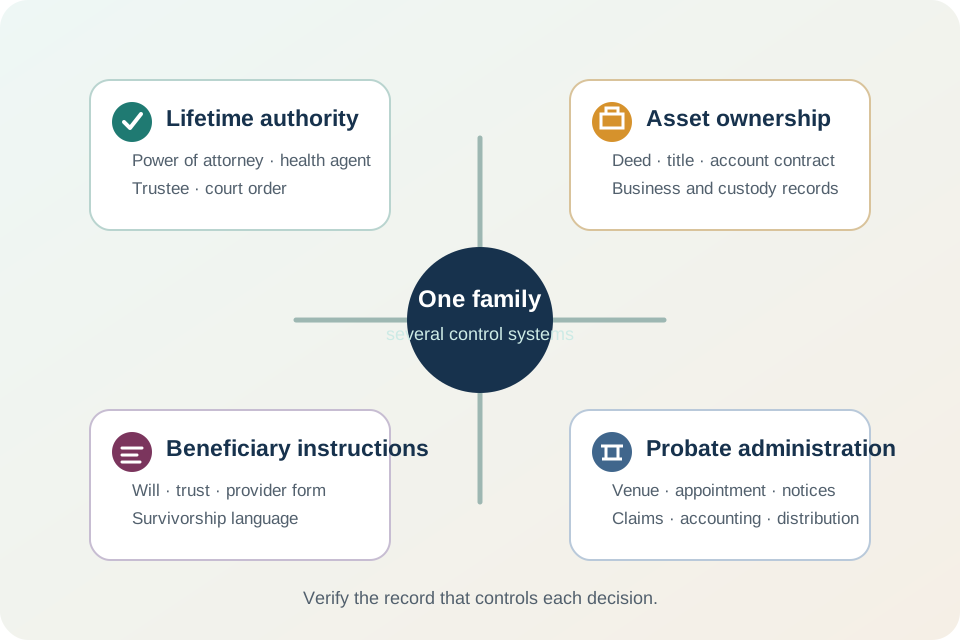
Estate plan control map
| Decision | Primary record | Verification point |
|---|---|---|
| Financial authority during life | Power of attorney, trust, or court order | Activation, scope, acceptance, and state law |
| Health-care decisions | Health-care agent document and treatment directive | Provider record, current wishes, and state form rules |
| Real-property transfer | Recorded deed plus governing transfer document | County recorder, title, liens, and property-state law |
| Account or insurance beneficiary | Provider's accepted designation | Current confirmation and contingent recipient |
| Probate administration | Will and court appointment | Venue, notices, claims, accounting, and distribution order |
Start with evidence, not assumptions
Use printable checklists to turn family recollections into a verified file. Each completed item should point to an original, statement, court record, provider confirmation, or official source.
State law is the switch point
Wills, probate, guardianship, deeds, and many trust questions are state-specific. The state guides identify the official court source and the local questions to confirm.
Questions readers are already trying to solve
Why Wyoming appears in estate-planning research
Separate ordinary family probate from specialized trust and asset-protection conversations.
Will versus trust in Puerto Rico
Start with civil-law succession, notarial records, property classification, and local advice.
What “grantor” means
Identify the trust creator, trustee, beneficiary, retained powers, and tax context.
Social-media legacy contacts
Compare provider tools, legal authority, privacy, memorialization, deletion, and content access.
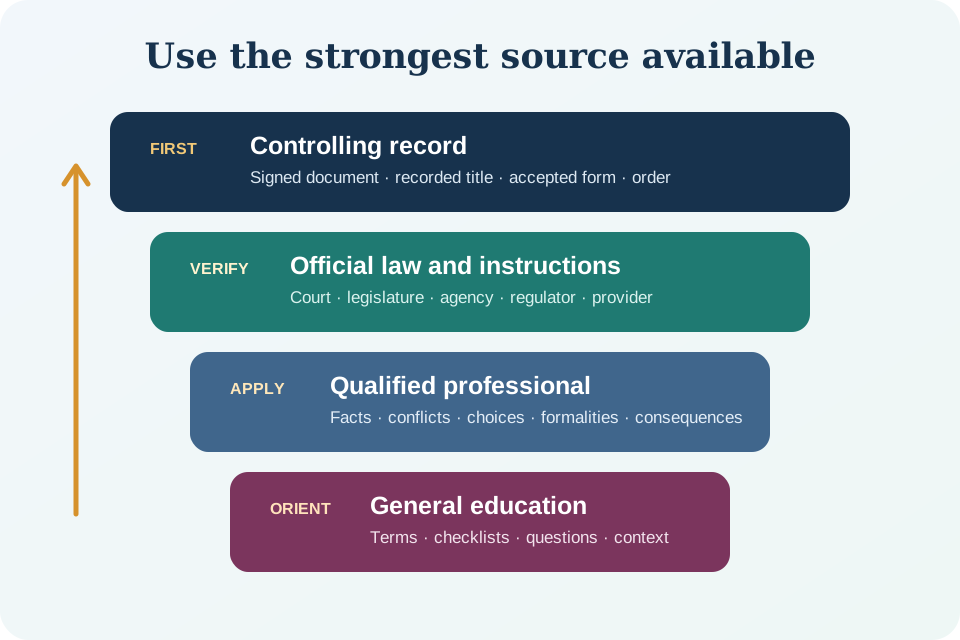
Source discipline
Use the strongest source available
The governing document, recorded title, court order, statute, agency rule, or provider contract should carry more weight than a generic article. Our guides show what to gather and where to verify—not what result to assume.
Independent and clear about limits
Trust and Will Law is operated by GlobalAI Media LLC. It is not a law firm, lawyer directory, document provider, or affiliate of Trust & Will or TrustandWill.com. Pages are educational and do not claim attorney review. Read the editorial policy, corrections policy, and advertising disclosure.